
Whenever anyone is coming to visit me in D.C., the first question is always: ‘What airport should I fly into?’ As much as I love giving them all incredibly detailed and distinguishing information about the options, I have decided to include it all in this article.
Washington Dulles International Airport (IAD)

Dulles, an airport in Virginia’s Fairfax and Loudon Counties, sits about 20 miles outside of the city. The giant airport overlooks the Blue Ridge Mountains and is the main hub for the district’s international flights.
The iconic swooping terminal was inspired by flight. It was opened in 1962 and named after a former Secretary of State.
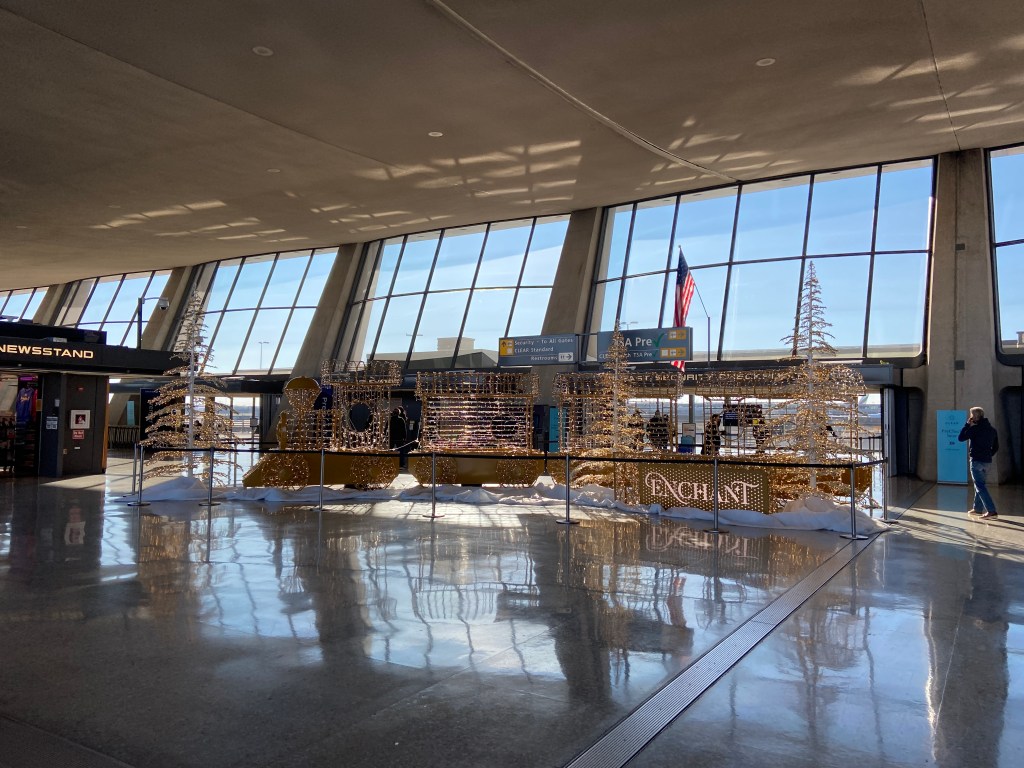
For domestic flights, IAD is a hub for United Airlines, which controls 70% of the passenger traffic. There are over 20 other airlines serving the airport, but none of the others control more than 5% of the traffic. The airport serves 74 domestic cities and 60 international. Outside of New York, it holds the most international passenger traffic on the East Coast.
Of the three D.C. airports, Dulles is the only one to include transportation between terminals. There is a small train and these strange (I lovingly use this word) bus-like devices that drive on the tarmac. Apparently they’re called mobile lounges.

In the terminals, local dining includes &pizza (Terminal C), Chef Geoff’s (Terminal C) and the Devil’s Backbone Taproom (Terminal D). For amenities, the international terminal (A &B) has a small mall with stores such as Coach and Ralph Lauren.

With the recently expanded Silver Metro line, it super easy to get to the city. It takes the Metro about an hour to reach the city through 15 stops. There’s an underground, covered walkway which connects the terminal and Metro station, but it is kind of far. Prices range from $2 to $6 depending on the time of day.
Driving takes about half an hour on the Dulles Expressway. While accessing D.C. doesn’t warrant a toll, if you get off at any other exit there will be.
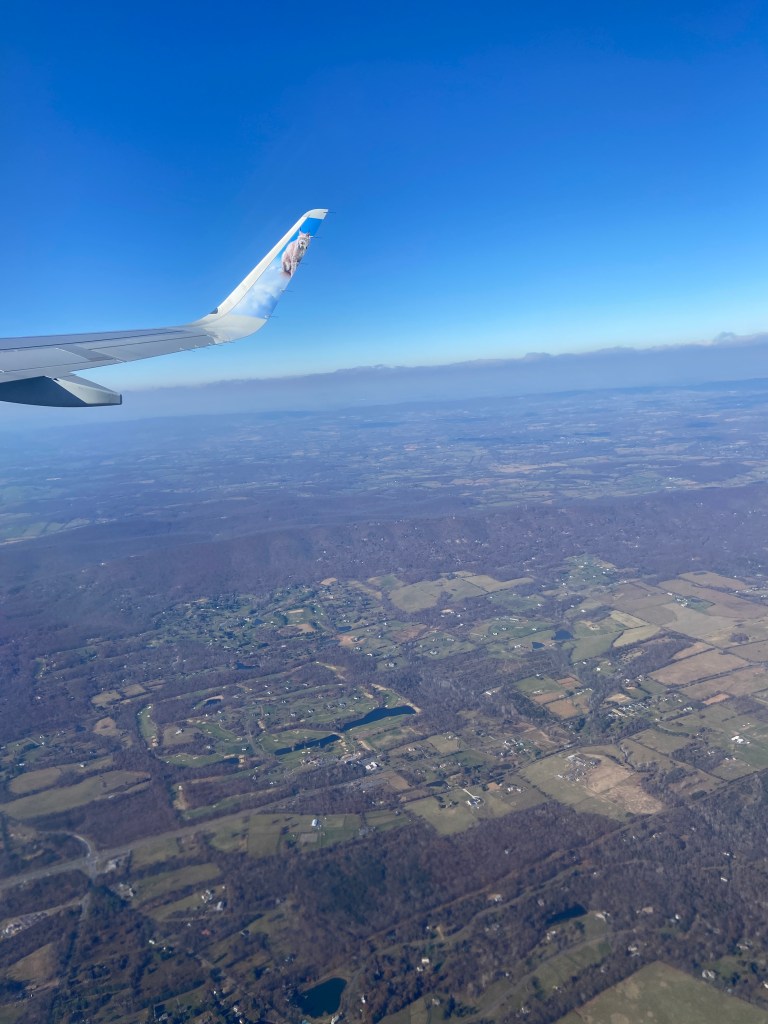
Dulles may be far and expensive but, it actually has the best track record for on-time arrivals and departures in the country!
Washington Reagan National Airport

National Airport is my favorite of the three D.C. airports. With the prettiest design, the airport is also closest to the city. It’s in Arlington County and on the Potomac River, meaning you can literally see the monuments from the terminal. DCA is the busiest of the three airports with almost 24 million passengers in 2022.
National started in 1926 as Hoover Field and officially opened in 1941.
In 1966, Congress enacted a ‘perimeter restriction’ at the airport in an effort to direct long-haul traffic to Dulles. The restriction first limited flights to under 650 miles, but has since been expanded to 1,250 miles. There are currently only 14 routes that surpass this requirement, all of which needed special approval.
Unlike the other two airports, DCA has a pretty even split when it comes to competition. While it is a hub for American Airlines, the airline only controls about 30% of the passenger traffic.
The airport mostly uses one runway, which was named the busiest in the country. Because of the airspace restrictions around the nation’s capital, the iconic river approach grants fantastic views of the National Mall and Arlington skyline while swerving down to the runway.
The airport is on the National Register of Historic Places and designates the original terminal as a museum.

It’s worth as stop and feels like a time capsule homage to seventies-era travel. There’s a small display about the history of the airport’s passenger traffic cool views of the runway.
My top choice for local food is D.C.’s iconic Ben’s Chili Bowl (Terminal C) but other options are Timber Pizza Company (Terminal E), &Pizza (Terminals E & D) and El Centro (Terminal C). The airport has a wine bar, a Vineyard Vines and a really cool bookstore (with faux brick).
D.C. is three stops away on the Yellow Line (board trains toward Mt. Vernon Square) and just a few more on the blue. Old Town Alexandria is also just south of the terminal. The airport is connected to the rest of Arlington and D.C. through bike trails and has free bike parking outside. What a way to offset your carbon impact!
Baltimore Washington International

As the name suggests, BWI is in between both Washington, D.C. and Baltimore. The airport, which is 25 miles away from D.C., easily serves both communities with public transportation.
BWI usually has the cheapest flights in the area with Frontier, Spirit and Allegiant almost exclusively using it for DMV clientele. Southwest has a hub at the airport and controls almost 72% of the passenger traffic. Spirit holds the next highest at 9%.
There’s no direct Metro line to BWI, but a few commuter routes connect it to Union Station. It’s a short bus ride from the terminal to the train station where either MARC (MD commuter rail) or Amtrak will pick you up. The Amtrak has a pretty fluid schedule, but the MARC comes as often as every 20 minutes during rush hour. Here’s the timetable.
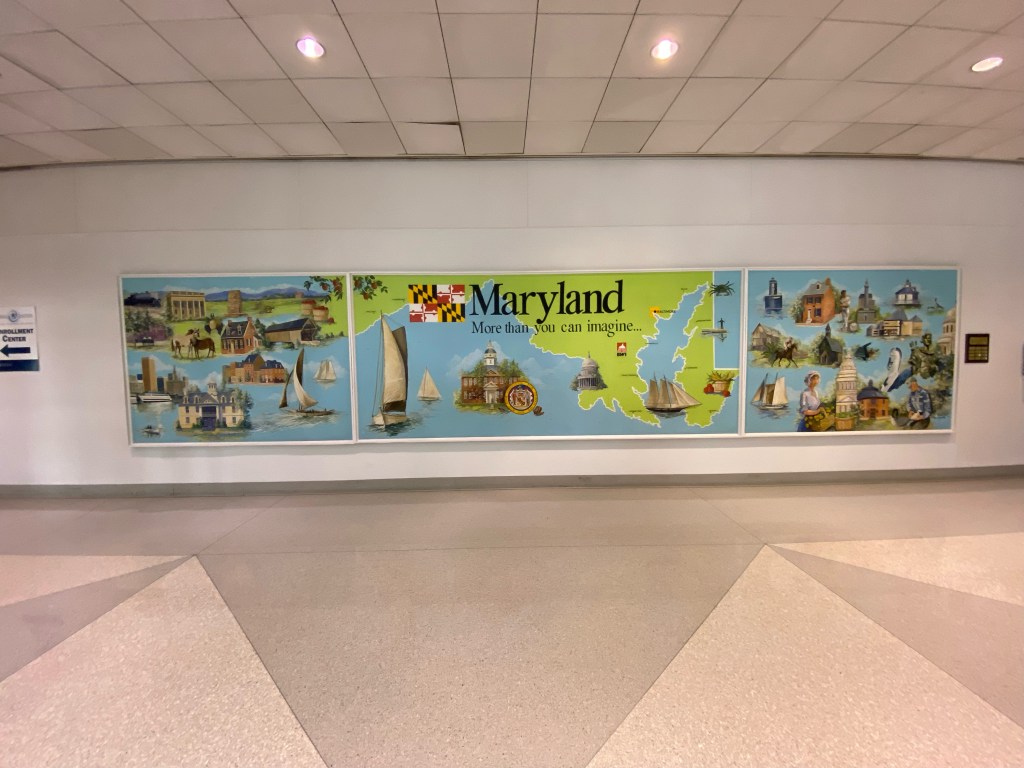
It’s about 45 minutes to get into the city. MARC charges a flat rate of $8 via the Penn Line. Amtrak ranges anywhere from $5 – $30. If you’re looking to get to Baltimore, LightRail Link will take you in nine stops.
If you have some time to kill at the train station, there’s a short elevated trail through the woods.

As for amenities, I’ve never seen it open, but the airport has a cool outside observation area where you can watch the planes. There is a bookstore in Concourse D that’s worth a stop.
Local cuisine can be found at Miss Shirley’s Cafe (Concourse A) and the Flying Dog Taphouse (Concourse A). There are even TWO wine bars, in Concourses A & D.

I know everyone warns of eating seafood in an airport, but you are in Maryland and I think you should indulge. Stop by R&R Seafood Bar (Concourses A & E) or Phillips Seafood (Concourse D) for some crabs. If you want a more familiar dining experience, they have an abundance of Starbucks, McDonalds and even a Silver Diner.
 Turquoise Skies